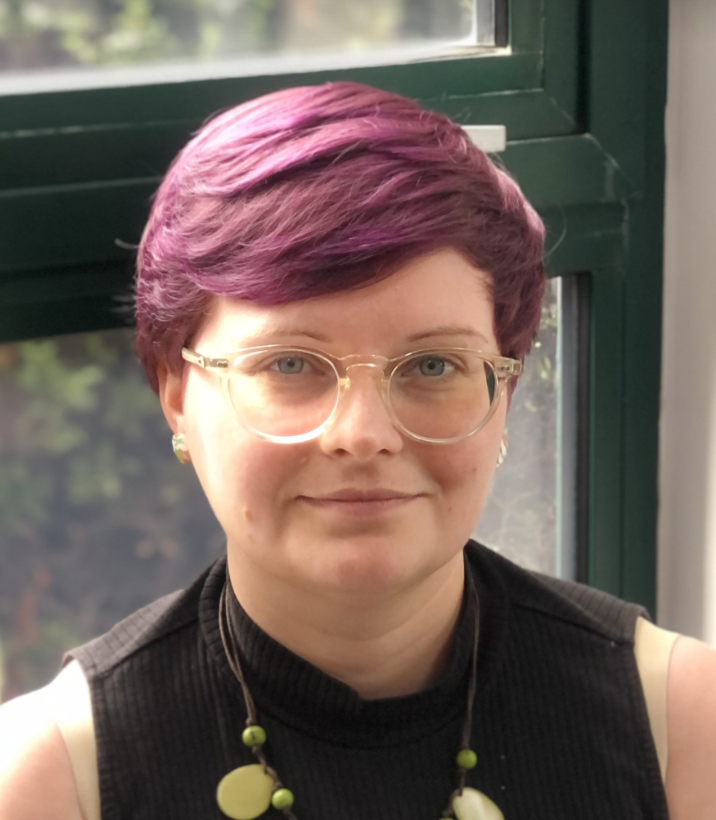

To celebrate International Women in Engineering Day (INWED) 2026, we are shining a spotlight on the incredible talent within Naimuri.
This year’s theme is Engineering Intelligence, a concept that spans everything from complex cloud automation to the deeply human design choices that make software usable.
We sat down with Software Engineer Kay V to talk about her unconventional path into tech, what intelligent systems look like in practice, and why she views herself not as a woman in tech, but simply as an engineer who is darn good at her job!
Redefining engineering intelligence
For Kay, engineering intelligence isn't about overcomplicating things; it’s about doing the heavy lifting behind the scenes so the end user doesn't have to.
"To me, it means creating user experiences that are intuitive," Kay explains. "We build the system to handle the complex, heavy tasks so the user can focus their energy on more important, nuanced decisions.
Working with complex data is what we do at Naimuri. To ensure our clients receive intelligent, trustworthy outcomes, it is key that security and transparency must be woven into our software lifecycle from day one
"You have to understand the end user and exactly how they’ll interact with the product. The data driving it must be protected in a transparent, secure manner so clients can track exactly what happens at each stage and why. This builds trust in the entire ecosystem."
Balancing the hard tech with human empathy
How does a team balance rigid technical automation (like cloud infrastructure and code) with human dynamics? Kay believes the secret lies in flexibility and ownership.
- No one-size-fits-all: "Each project varies. Some need heavy technical automation; others require a deep focus on user experience."
- Shared knowledge, individual ownership: "At Naimuri, we all touch a bit of everything, so everyone knows what’s going on and can back each other up, but by giving individuals true ownership of specific project aspects, we achieve greater oversight without burning out the lead. It allows people to develop into true subject matter experts and explore their interests in a supported way."
The non-linear path: From roulette to refactoring
Many of the brightest minds in tech don’t follow a straight line, and Kay is no exception. Before writing code, she spent many years working in casinos. When redundancy hit, she found herself with six months of savings and a desire for a radical change.
"Someone recommended tech to me because I’ve always liked puzzles," she says.
"Because of my limited savings, I gambled on an intensive three-month bootcamp. It was a hard road. I put in a massive amount of extra time and work outside of the bootcamp hours to make it stick."
The gamble paid off. Kay secured her first role as a software engineer at Ditto AI, which was the exact moment she realised she belonged in the industry.
The ultimate transferable skills
While some might not see the link between customer service and software engineering, Kay views her past career as a superpower.
"Soft skills like people skills, conflict management, and empathy are invaluable. I learned these from years on the casino floor, and not a single day goes by where I don't use them to my advantage in engineering."
Surviving the steepest learning curves
Retraining later in life brought its own unique psychological hurdles.
"Having to accept that I knew absolutely nothing at the start was hard," Kay admits. "Once I got past that, I was hit by the overwhelming explosion of tech areas, languages, and frameworks. You are constantly bombarded with information."
Her advice for navigating that overwhelming tech landscape?
- Dip your toes in early: Try a variety of areas to find what you actually enjoy.
- Focus and commit: Once you find your niche, give it serious time to settle in.
- Find a guide: If you find someone willing to help navigate the industry, grab onto them.
- Continuous maintenance: "It is much easier to keep your skills up to date incrementally than to try and re-learn everything that changed over the last few years."
Culture, diversity, and twonks!
When it comes to building an inclusive culture, Kay points to one major factor: the freedom to speak up.
"A supportive culture relies on feedback and open communication. You should be able to complain if a process is annoying or if you have a better approach. Your team can then address it together, sometimes there’s a historical reason it’s done that way, or sometimes no one has just thought to change it yet. My current team at Naimuri really excels at this."
A Pragmatic take on diversity
When asked about the importance of diverse perspectives in engineering, Kay cuts straight to the practical reality of modern defense and tech:
"Our users are diverse, so why would our teams not reflect that? Malicious agents are diverse, so why would we consign ourselves to a single line of thought on defense? Ignoring diversity doesn't make it go away, it’s not an ideology, it’s a demographic."
As for the conversation around male allies and gender divides in the office, Kay keeps it refreshingly grounded:
"In my experience, most of the men I’ve worked with have been incredibly supportive and treated me like any other person on the team. It doesn't matter what industry you're in, sometimes you'll come across a twonk. Tell them where to go and move on with your life. You'll live in their head rent-free, which in this economy, is a gift!
There is no fundamental difference between men and women in this job; we are just people. We think the same thoughts, do the same things, and just get on with it. If more people adopted that attitude, it would go a long way."
Words of wisdom
For any young woman or career-changer looking at the vast world of tech and feeling intimidated by what they don’t know yet, Kay passes along the best piece of advice she ever received:
"If they can do it, I can do it."
"Everyone starts by knowing absolutely nothing," Kay says. "You are in great company. Personally, I don't really consider myself a 'woman in engineering', just an engineer who happens to have lady parts. I love my job, and I am darn good at it."
Interested in learning more about the culture and career opportunities at Naimuri? Check out our careers page or follow us on LinkedIn.